Spring and early summer 2026
The spring and early summer of 2026 has been a busy and rewarding season at Kvismare Bird Observatory. Across the wetlands, reedbeds, and surrounding woodland, our team has been out conducting systematic censuses, ringing nestlings, and individually marking breeding birds — continuing the long-term monitoring work that this site is known for.
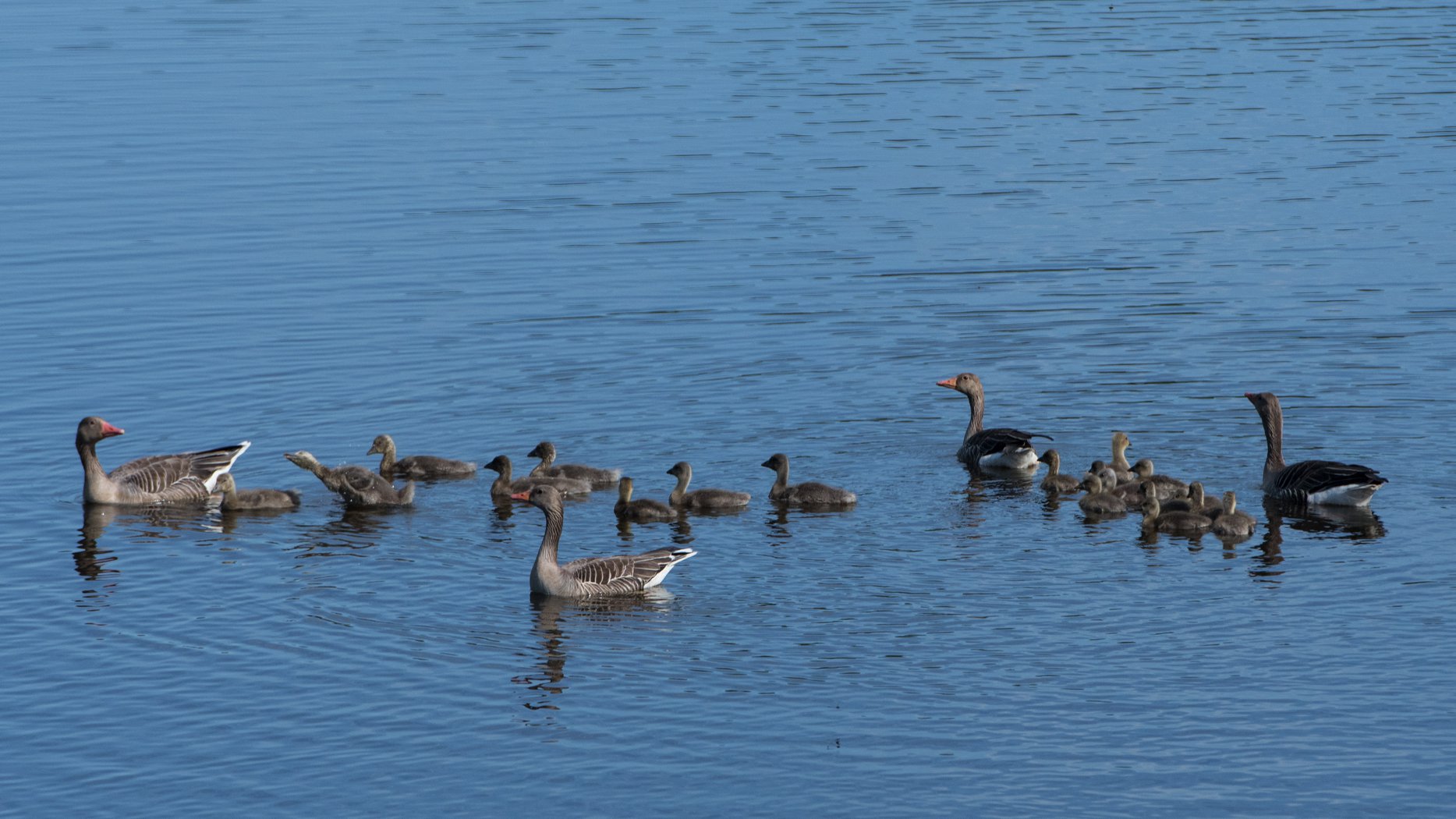
Wetland censuses: a season in motion
Our third wetland census of the season was carried out in May and captured the lake and its margins at a moment of considerable activity. The full sweep of the spring was evident: some species were still arriving from their wintering grounds, others were already well into nesting, and the earliest breeders had young at their heels.
Among the migratory arrivals, we recorded black tern (Chlidonias niger) and Temminck's stint (Calidris temminckii) — the latter passing through Kvismaren on its way to breeding grounds further north. Also on the move were white-fronted geese (Anser albifrons), still heading northward toward their Arctic breeding grounds.
Already settled in were black-headed gulls (Chroicocephalus ridibundus), busy with nest construction, and greylag geese (Anser anser), with some pairs already shepherding their first goslings across the water.
Common starling: nest-box ringing completed
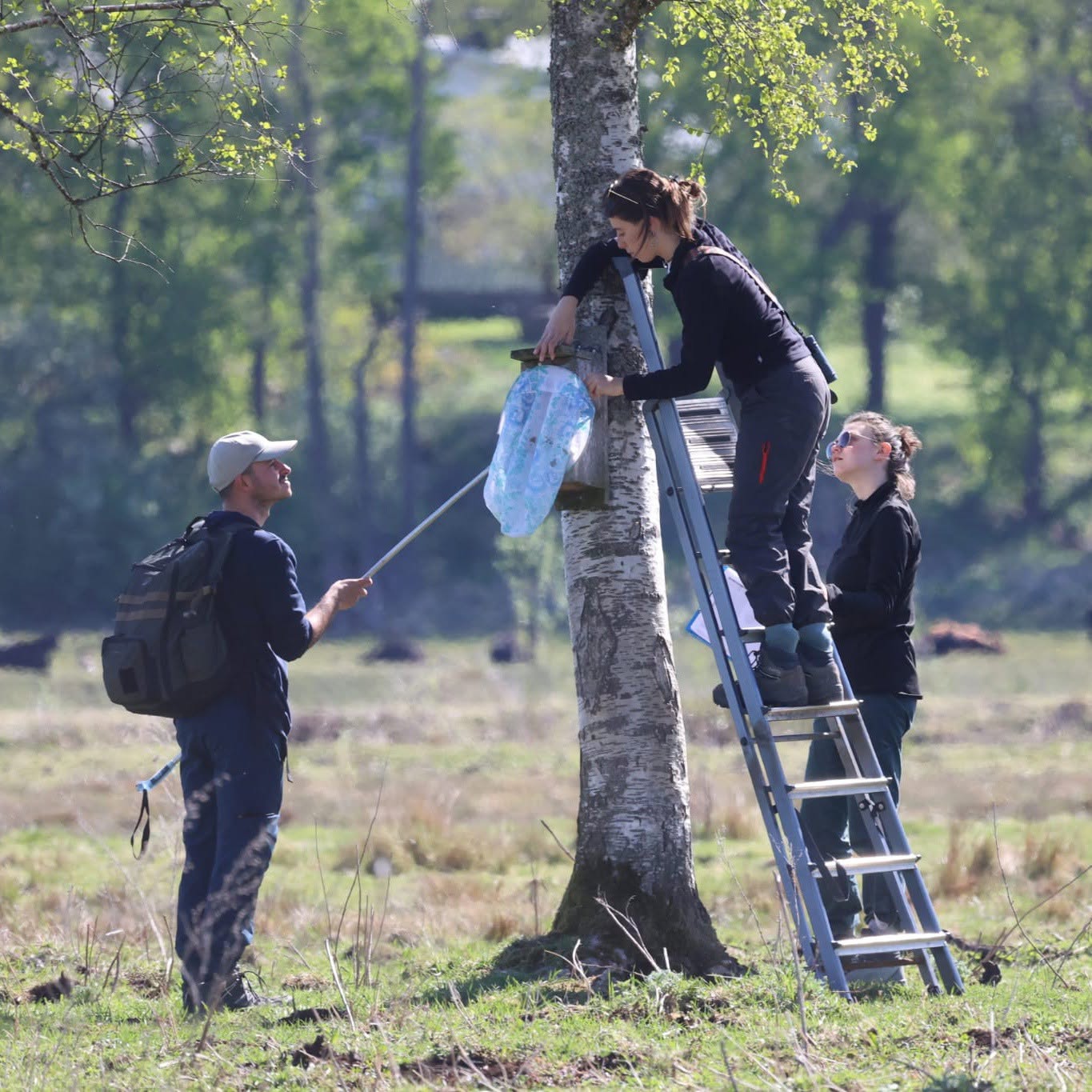
By early June, our common starling (Sturnus vulgaris) nest-box ringing project had been successfully completed. Across 17 occupied boxes, we ringed a total of 55 chicks — an average of just over three per box.
Each chick now carries a uniquely numbered metal ring. Should the bird be recovered or recaptured by other ringers in the coming years, that ring links the individual back to its hatching time and location here at Kvismaren. Over time, these records contribute to our understanding of survival, dispersal, and the productivity of the local breeding population.
Savi's warbler: surveying the reedbeds
During June, our team has been systematically locating Savi's warbler (Locustella luscinioides) singing males throughout the reedbeds, capturing individuals for ringing and colour-marking. The species is best detected by the males' distinctive reeling song — a continuous buzz delivered from within the reed stems — which can be heard long before the bird is seen.
Colour rings allow us to identify individual birds in the field without needing to recapture them, making it possible to track whether a male returns to the same territory in a subsequent year. By following marked individuals across seasons, we aim to estimate the size of the breeding population, assess territory occupancy, and build a clearer picture of habitat use within the reedbeds.
Sörön forest: tits, sparrows, and flycatchers
The observatory's monitoring work extends beyond the lake itself. In the Sörön woodland (a nearby nature reserve), we maintain a network of nest boxes for cavity-nesting forest birds, and this season's ringing round has now been completed.
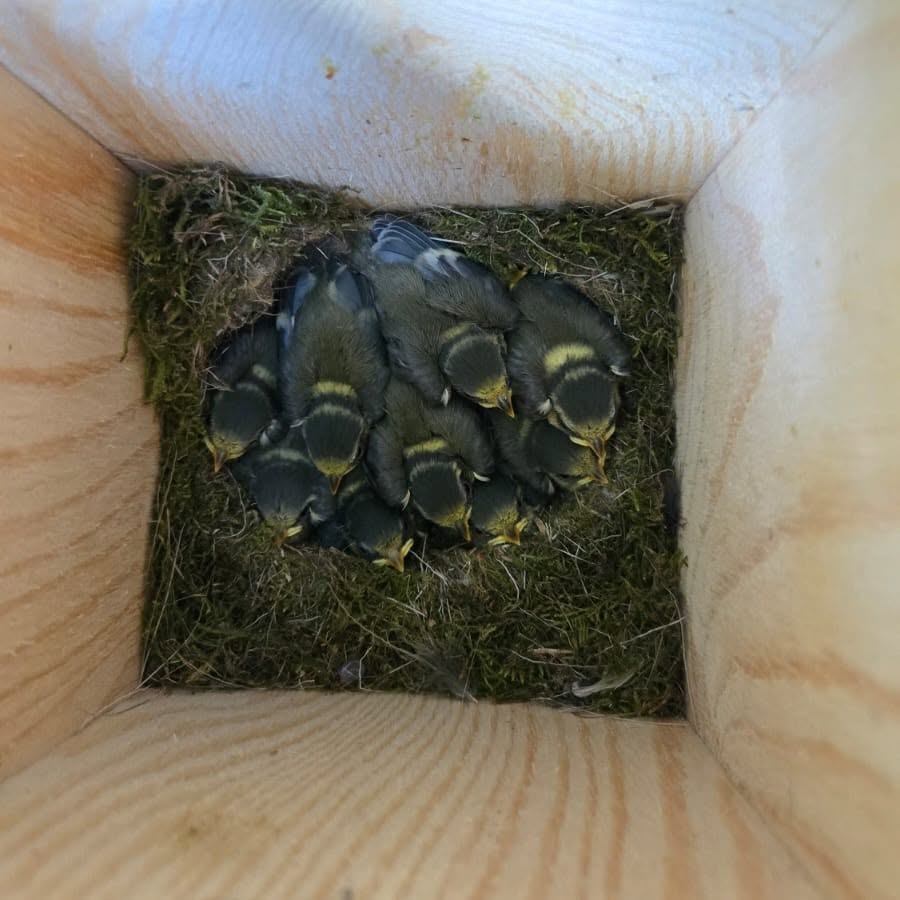
Four species were ringed this year: blue tit (Cyanistes caeruleus), great tit (Parus major), tree sparrow (Passer montanus), and pied flycatcher (Ficedula hypoleuca). Ringing the nestlings each year builds a record of breeding productivity across the box network. If an adult from a previous year is recaptured on a nest, it also confirms that the individual survived the winter and returned — adding to the survival data we hold for each species.
Monitoring work at Kvismare Bird Observatory is carried out by our team of volunteers. We are grateful to everyone who contributed to the fieldwork this spring. If you would like to support our work or get involved, please get in touch.